
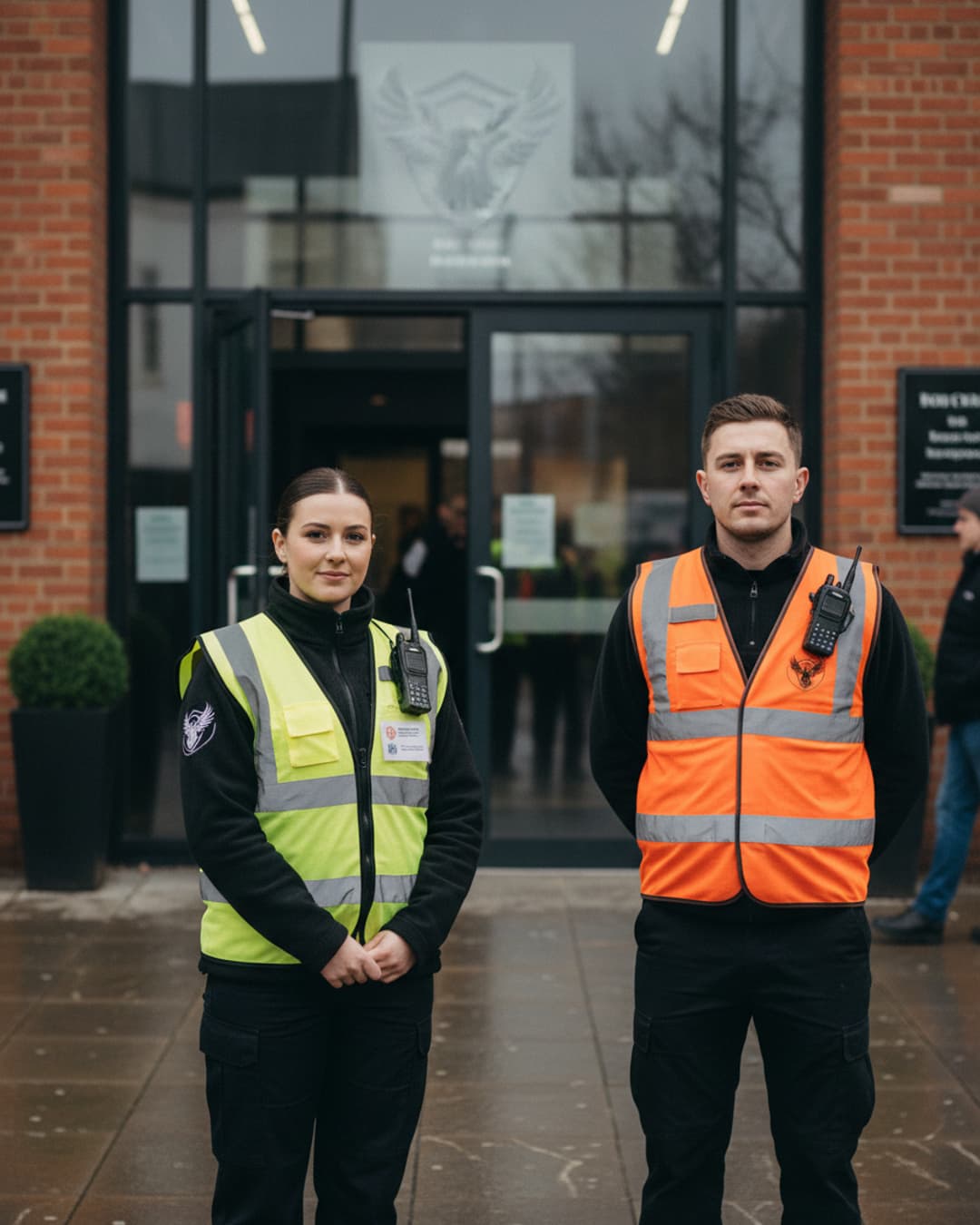
01The Foundation: SIA Licensing and Code of Conduct
Door supervisors in the UK carry significant legal responsibilities. These are primarily governed by the Private Security Industry Act 2001 (PSIA) and regulated by the Security Industry Authority (SIA). Their role extends beyond basic security to include public safety, crime prevention, and strict adherence to various legal frameworks.
All door supervisors must hold a valid SIA Door Supervisor licence. This is a legal requirement, mandated by the Private Security Industry Act 2001. To obtain this, individuals complete an accredited Level 2 Award, covering conflict management, physical intervention, and relevant law. They also pass identity and criminal record checks. The licence must be worn visibly with the photograph displayed while on duty.
Ensuring all door supervisors hold a valid SIA licence is paramount for compliance and peace of mind. At Eagle Nest Security Services, every licence is checked on the public SIA register before shifts and re-checked regularly, guaranteeing legitimate and qualified personnel.
The SIA also sets a Code of Conduct, known as the Six Commitments. These include acting with honesty, integrity, and professionalism. Licence holders must protect people and property, act fairly, and be accountable. Failure to comply can lead to warnings, licence suspension, or criminal prosecution.
02Key Legislation Governing Door Supervisors
Beyond SIA regulations, door supervisors must comply with several other critical laws.
The Licensing Act 2003 outlines responsibilities for alcohol consumption and public order. Supervisors must refuse entry or service to intoxicated individuals. They prevent underage entry by verifying age and report suspected drug use. This protects both patrons and the venue's licence.
Under the Health and Safety at Work Act 1974, door supervisors help ensure a safe environment. They identify hazards, assist with emergency procedures like evacuations, and report risks promptly.
The Criminal Justice and Public Order Act 1994 is crucial regarding the use of force. This law strictly prohibits the use of excessive force. Additionally, the Equality Act 2010 prohibits discrimination based on protected characteristics. These include race, sex, disability, religion, or sexual orientation.
03Core Responsibilities and Powers
Door supervisors perform a range of duties that go far beyond simply standing at an entrance.
- Access Control: Checking IDs, managing guest lists, preventing unauthorised entry, and refusing entry to intoxicated individuals or those who pose a risk.
- Crowd Management: Monitoring queues, controlling entry flow, preventing overcrowding, and managing crowd behaviour both inside and outside the venue.
- Conflict Management and De-escalation: Identifying and handling disputes using verbal skills. Physical intervention is used only as a last resort, ensuring it is reasonable, necessary, and proportionate.
- Removal and Detention: Escorting individuals off premises, using reasonable force if necessary. They can detain individuals in a citizen's arrest until the police arrive, but possess no powers of arrest beyond those of an ordinary citizen.
- Searches: Conducting pat-down or bag searches with consent or as a condition of entry. They can confiscate prohibited items like weapons or drugs.
- Emergency Response: Assisting in evacuations, administering first aid, and coordinating with emergency services.
- Incident Reporting: Documenting all incidents accurately. This is vital for licensing compliance, insurance claims, and potential legal proceedings.
- Liaison with Authorities: Cooperating effectively with police and licensing authorities.
04Limitations on Powers
While door supervisors have significant responsibilities, their powers are also clearly defined and limited.
They cannot carry weapons. They must never use physical punishment or retaliation, only the minimum force needed for a situation. All actions must align with PSIA allowances and venue policies.
Door supervisors cannot store or misuse personal data without a valid reason. They must not exceed their granted authorities or act in a discriminatory manner. Understanding these limitations is crucial for responsible security operations. Furthermore, ensuring officers are supported and monitored throughout their shift helps maintain professional standards. Our officers at Eagle Nest Security clock in on-site with GPS and a live selfie, and complete hourly welfare check-ins, with dispatch alerted if one is missed.
05Practical Application and Compliance
For businesses, selecting a security provider that fully understands and implements these responsibilities is critical. Professional door supervisors maintain a calm demeanour and use excellent communication skills.
They prioritise prevention over intervention and proactively manage risks. Staying updated with licensing laws and venue-specific regulations is essential. They must also be aware of signs of vulnerability in patrons, such as intoxication or potential exploitation.
All actions taken by door supervisors must be lawful, respectful, and thoroughly documented. This meticulous approach helps protect your venue, its patrons, and your reputation. Ensuring your security team is well-versed in these areas is key to effective manned guarding.
A reliable security partner will guarantee their officers' compliance. For example, at Eagle Nest Security Services, if an officer's SIA licence is not valid, the client does not pay for that shift, as detailed in our Terms of Engagement.
For dependable and legally compliant security solutions in the UK, consider partnering with a service that prioritises these standards. You can contact us to discuss your specific security needs.
Quick answers
What is an SIA licence for door supervisors?
An SIA licence is a mandatory legal requirement for all door supervisors in the UK, ensuring they meet specific training standards and pass background checks.
Can door supervisors use physical force?
Yes, door supervisors can use physical intervention, but only as a last resort, and it must always be reasonable, necessary, and proportionate to the situation.
Do door supervisors have powers of arrest?
Door supervisors have powers of citizen's arrest, which are the same as those of any ordinary citizen, allowing them to detain someone until the police arrive.
Licensed, checked and visible: GPS clock-in, hourly check-ins and a live client portal.