
01What is Martyn's Law and Why Does it Matter Now?
Martyn's Law, officially the Terrorism (Protection of Premises) Act 2025, received Royal Assent on 3 April 2025. It is a UK law designed to improve public safety against terrorist attacks.
The Act honours Martyn Hett, a victim of the 2017 Manchester Arena attack. Its aim is to make publicly accessible locations safer.
While enforcement is expected in Spring 2027, the implementation period began in April 2025. This means businesses have been given time to prepare.
The Home Office published statutory guidance on 15 April 2026. This guidance details how businesses must meet their new legal duties.
Crucially, the Security Industry Authority (SIA) released new planning tools on 9 November 2026. These tools are now available to help premises understand their obligations.
02Who is Affected by Martyn's Law?
Martyn's Law applies to 'responsible persons'. These are individuals or organisations that control publicly accessible premises or events.
Your business is in scope if you can reasonably expect 200 or more people to be present at any one time. This count includes your staff.
The law uses a two-tier system to define responsibilities based on capacity:
Understanding which tier applies to your premises is the first step in compliance. You need to assess your maximum occupancy carefully.
- Standard Tier: For premises or events with a capacity of 200 to 799 people.
- Enhanced Tier: For premises or events with a capacity of 800 or more people.
03Your Duties: Standard vs. Enhanced Tiers
All businesses in scope have general duties. These include understanding the threat of terrorism and conducting vulnerability assessments.
You must also work to mitigate risks and put a counter-terrorism plan in place. Staff training is also a key requirement.
For Standard Tier premises, duties focus on 'low-cost activities'. This involves staff training on evacuation, invacuation (moving to a safe internal area), and lockdown procedures. You also need clear communication plans for emergencies.
Standard Tier businesses must complete an emergency preparedness plan. Documenting procedures and a simple risk assessment is considered good practice, even if not legally mandated.
For Enhanced Tier premises, the requirements are more comprehensive. You must conduct detailed risk assessments and create thorough security and response plans. Designated roles and responsibilities are mandatory, along with enhanced training.
Enhanced Tier premises may also need physical security measures. These could include CCTV, bag search policies, or vehicle checks.
04Preparing Your Business for Spring 2027
The Security Industry Authority (SIA) is the designated regulator. They will help businesses comply, assess compliance, and identify non-compliance.
Organisations that do not comply could face significant civil penalties. For the Standard Tier, the maximum penalty is £10,000.
For the Enhanced Tier, penalties can reach up to £18 million or 5% of your organisation's global revenue, whichever is higher.
Start Preparing Now: Do not wait until Spring 2027. Use this implementation period to review your current security and planning.
Consult Guidance: Familiarise yourself with the Home Office statutory guidance published in April 2026. Also use the new SIA planning tools released on 9 November 2026.
Utilise Resources: Free advice and e-learning are available on ProtectUK. This includes Action Counters Terrorism (ACT) Awareness and See, Check and Notify (SCaN).
Review and Plan: Look at your existing security arrangements and identify any gaps. Engage your staff in preparedness planning. Focus on clear procedures for evacuation, invacuation, lockdown, and communication.
The law's requirements are designed to be proportionate. They match the size and nature of your venue. Compliance does not always mean buying specialist services or consultants.
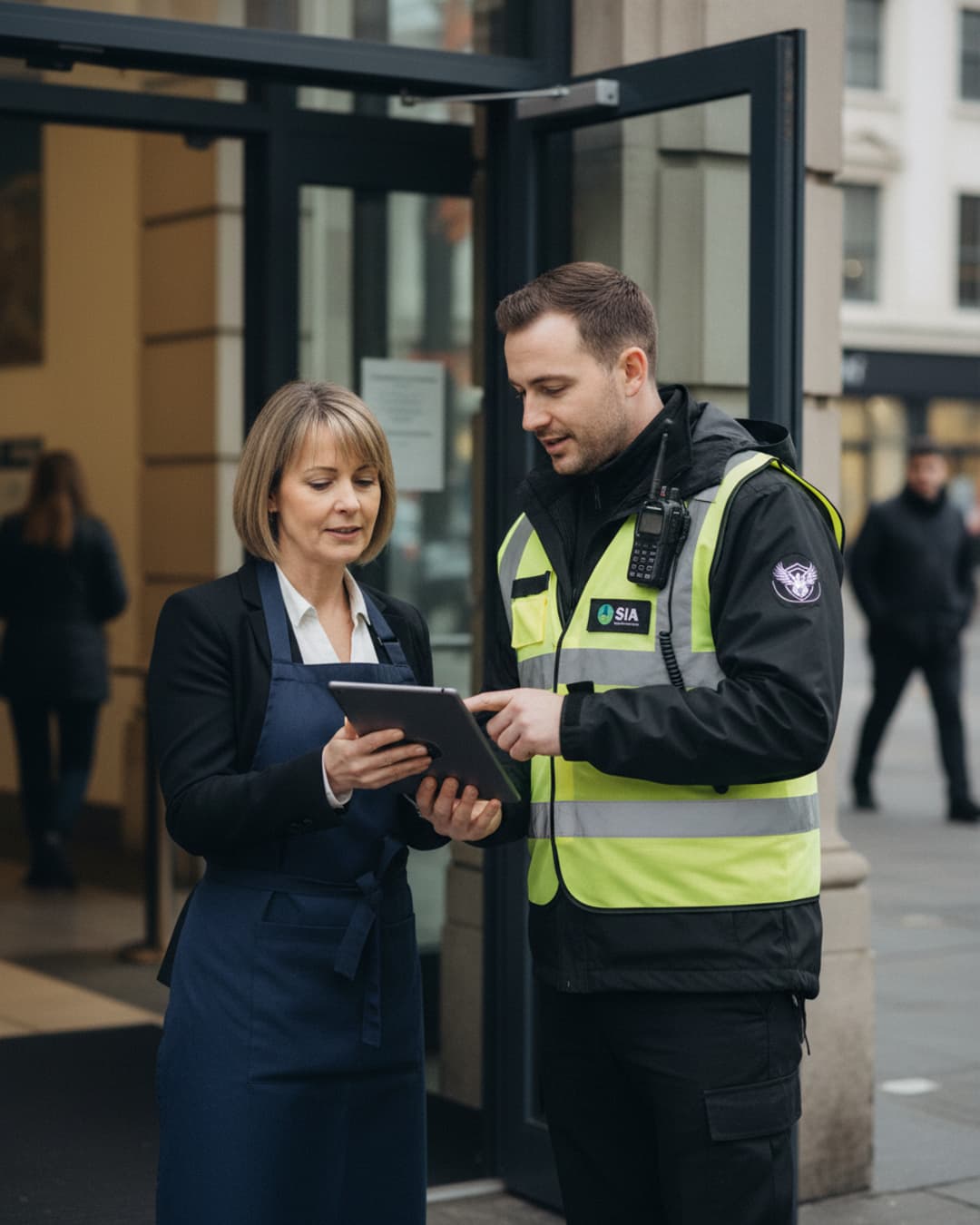
Effective security planning relies on well-trained, reliable personnel. Ensuring your security personnel are properly vetted and consistently present is key. Eagle Nest Security Services ensures every SIA-licensed officer is checked on the public SIA register before shifts. Our system tracks officers with GPS and live selfie clock-in, and hourly welfare checks ensure they are always alert and on duty.
Security risk management is an ongoing process. Your procedures should be reviewed and updated regularly.
Quick answers
When does Martyn's Law officially start?
Martyn's Law received Royal Assent on 3 April 2025, making it law. However, enforcement of its duties is expected to begin in Spring 2027, allowing businesses time to prepare.
How do I know if my business is affected by Martyn's Law?
Your business is affected if your premises or event can reasonably expect 200 or more people (including staff) to be present at any one time. This places you in either the Standard or Enhanced tier.
What resources are available to help me comply with Martyn's Law?
You should consult the Home Office statutory guidance (published 15 April 2026) and the SIA planning tools (released 9 November 2026). Free e-learning and advice are also available on ProtectUK.
Licensed, checked and visible: GPS clock-in, hourly check-ins and a live client portal.